
For ten years, I double-cleansed every morning and every night. Oil cleanser first to remove sunscreen and makeup, then a water-based cleanser to remove the residue. This was the advice from every dermatologist, every beauty magazine, and every Korean skincare tutorial I had read. It was not optional. It was the baseline.
I stopped in late 2024. Not because I read a contrary study. Because I noticed that my skin, which had been increasingly reactive for two years, was reactive in the exact pattern of over-cleansing. My dermatologist confirmed the diagnosis. The fix was to stop.
This is the case for less cleansing, why the twice-a-day rule is wrong for most skin types, and how to figure out whether it is wrong for you.
What over-cleansing actually does
The skin has a barrier. The barrier is made up of corneocytes (dead skin cells), lipids (ceramides, cholesterol, fatty acids), and the acid mantle (a slightly acidic film on the surface). The barrier's job is to keep water in and irritants out.
Cleansers, by design, disrupt the barrier. They use surfactants to emulsify oils, including the oils that make up part of the barrier. The disruption is necessary to remove dirt, oil, and product residue. It is also damaging if it happens too often or with the wrong products.
The signs of over-cleansing:
Tightness after washing. Skin should not feel tight after cleansing. Tightness is the signal that the barrier has been stripped.
Increased oil production in the hours after washing. Many people who feel their skin is "oily" are actually over-cleansing and triggering rebound oil production. The skin senses that its barrier has been stripped and produces more oil to compensate.
Sensitivity to products that did not previously irritate. A serum or moisturizer that worked fine two years ago starts to sting. The product has not changed. The skin's tolerance has changed because the barrier has been compromised.
Redness and irritation around the nose, mouth, and chin. These are the areas where the skin is thinnest and the barrier is most easily damaged.
Flaking and dehydration. The paradoxical combination of feeling dry and looking oily. The barrier cannot retain water, so the skin is dehydrated, but the dehydration triggers oil production.
This was my skin in 2024. The dermatologist asked about my routine. When I described double-cleansing morning and night, she asked how often I had been experiencing the symptoms. When I said for about two years, she said the routine was almost certainly the cause.
Why the twice-a-day rule became standard
The twice-a-day rule was not always the standard. It became the standard through a combination of Korean skincare influence, dermatologist consensus, and skincare marketing.
The Korean double-cleansing method, popularized in the West through K-beauty publications in the 2010s, originated in the context of Korean skin types, Korean pollution levels, and Korean sunscreen formulations. Korean sunscreens tend to be more durable and harder to remove than Western formulations. The double-cleansing method was developed to address that specific challenge.
The method then generalized. Without the context, the practice got applied to all skin types and all environments. The advice became "everyone should double-cleanse twice a day" rather than "people who wear heavy Korean sunscreen in polluted urban environments may benefit from double-cleansing."
The dermatologist consensus also moved in this direction in the 2010s, partly because of the influence of Korean skincare and partly because the barrier science was less developed. The most recent barrier research has been more cautious about over-cleansing.
The marketing, of course, has followed the trend. Cleanser sales doubled in the 2010s, and brands encouraged consumers to use more product more frequently. The twice-a-day rule has been a financial win for the industry.
What the current evidence supports
A summary of what the most recent barrier research suggests:
Once-a-day cleansing is sufficient for most skin types. The exception is heavy exercise, heavy makeup, or heavy sunscreen use, which may justify a second cleanse.
Cleansing in the morning is unnecessary for most people. The skin produces less oil overnight than during the day. The "morning cleanse" removes sebum that is not really there and compromises the barrier unnecessarily.
Gentle cleansers are preferable to foaming or sulfate cleansers. Sulfate-based cleansers (sodium lauryl sulfate, sodium laureth sulfate) are effective but harsh. Non-sulfate surfactants (cocamidopropyl betaine, decyl glucoside) are gentler.
Water temperature matters. Hot water strips the barrier more aggressively than lukewarm or cool water. Cool water is the most barrier-friendly.
Cleansing duration matters. Thirty to sixty seconds is sufficient. Longer cleansing time does not produce cleaner skin; it produces more barrier damage.
The combination of these findings is the case for the routine I now use.
My current routine
After six months of less aggressive cleansing, my skin is meaningfully better than it was. The reactivity is gone. The flaking is gone. The dehydration-with-oiliness paradox is resolved. The barrier, in the words of my dermatologist, "looks normal."
The routine:
Morning. Splash face with cool water. Apply hyaluronic acid on damp skin. Apply moisturizer. Apply sunscreen. That is it.
Evening. Use a gentle cleanser (CeraVe Hydrating Cleanser) once, for about forty-five seconds, with cool water. Apply actives if it is an active night. Apply moisturizer.
Heavy makeup or sunscreen days. If I am wearing heavy makeup or a particularly durable sunscreen, I will use an oil cleanser first and then follow with the gentle cleanser. This is once a week or so, not every day.
Total cleansing time per day: about one minute. Total product use: one cleanser, used once.
What the change taught me
The single most important thing I have learned about skincare in the last five years is that the marketing tends to push us toward more. More products, more steps, more actives, more cleansing. The science is often pushing in the opposite direction. The skin is more robust than the marketing suggests, and it is more easily damaged by overuse than the marketing admits.
The skin does not need a lot of help. It needs the right amount of help. The right amount is usually less than the industry wants to sell.
I also learned that skincare advice that worked for one life stage does not necessarily work for another. The routine I had in my twenties, when my skin was oilier and more resilient, was not the right routine in my thirties, when my skin became drier and more reactive. The same is true for most people. The routine that works at 25 is not the routine that works at 45.
The exceptions
Less cleansing is not right for everyone. The exceptions are worth naming.
Heavy makeup users. If you are wearing heavy foundation, concealer, and setting products daily, you do need to cleanse more thoroughly. Oil cleanser first, water cleanser second.
Active outdoor exercisers. If you are running, cycling, or doing other activities that produce significant sweat, you need to cleanse the sweat off. The sweat itself is not damaging, but the salt and bacteria it contains can cause irritation if left on the skin.
People with oily skin types. Oily skin can tolerate more cleansing than dry skin without visible barrier damage. If your skin is reliably oily and you are not experiencing barrier symptoms, the twice-a-day routine may be fine.
People who wear heavy sunscreen. Some mineral and chemical sunscreen formulations are designed to be very durable and require oil-based cleansing to remove. If your sunscreen is not coming off with a water cleanser, you need an oil cleanser first.
People with specific skin conditions. Acne, seborrheic dermatitis, and other conditions that involve excess sebum may require more frequent cleansing. This should be done under the guidance of a dermatologist, not based on internet advice.
If none of those exceptions apply to you, less cleansing is probably worth trying.
How to do it gradually
The transition matters. If you have been double-cleansing twice a day for years, your skin has adapted to that frequency. Stopping abruptly can trigger a temporary rebound in oil production as the skin adjusts.
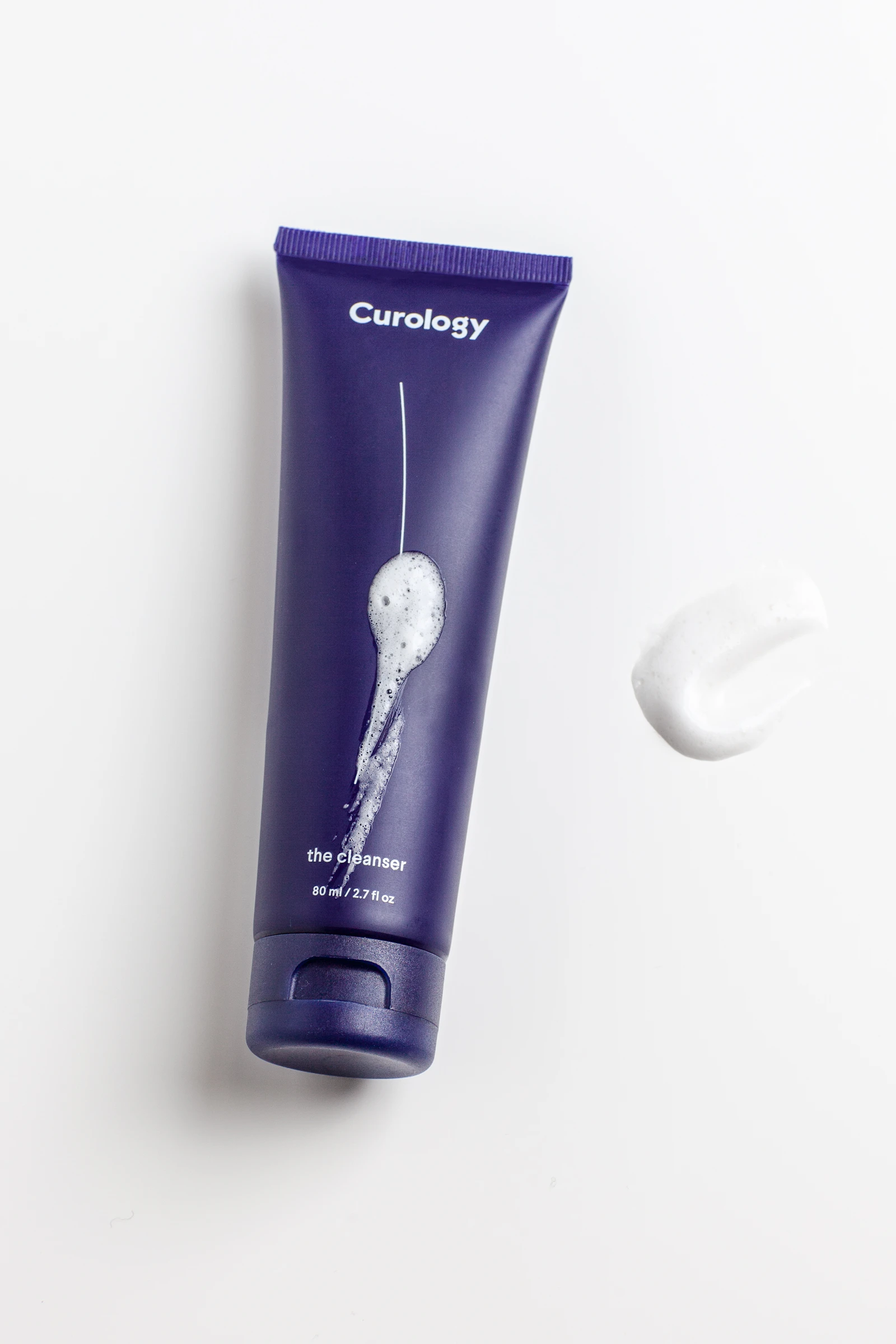
A minimalist vanity showing only a single gentle cleanser and a bar of soap, illustrating a pared-back routine
The protocol:
Weeks 1 and 2. Drop the morning cleanse. Splash with water instead. Continue evening double-cleanse.
Weeks 3 and 4. Drop one of the evening cleanses. Use a single gentle cleanser at night.
Weeks 5 and 6. Continue with water in the morning and a single gentle cleanser at night.
Week 7 and beyond. Maintain the routine. Add an evening double-cleanse on heavy makeup or sunscreen days.
The transition takes about six weeks. The skin adjusts. The barrier recovers. The visible results are usually clearer by the third month.
The honest summary
I am not against cleansing. I am against the specific pattern of double-cleansing twice a day, which I think over-cleanses for most skin types.
The twice-a-day rule is one of those pieces of skincare advice that has become so canonical that nobody questions it. It is in every dermatology textbook. It is in every skincare guide. It is in every marketing campaign. The barrier science is less settled than the advice suggests.
If your skin is not showing barrier symptoms, the current routine may be fine. If your skin is showing barrier symptoms, less cleansing is the easiest, cheapest, and most evidence-supported intervention to try first.
I am not a dermatologist. I am someone who spent two years wondering why my skin was getting worse despite using more products. The answer turned out to be that I was using too many products, and the specific one to remove was the one I had been told was the most essential. The lesson applies to more than cleansing. It applies to most of the routine.