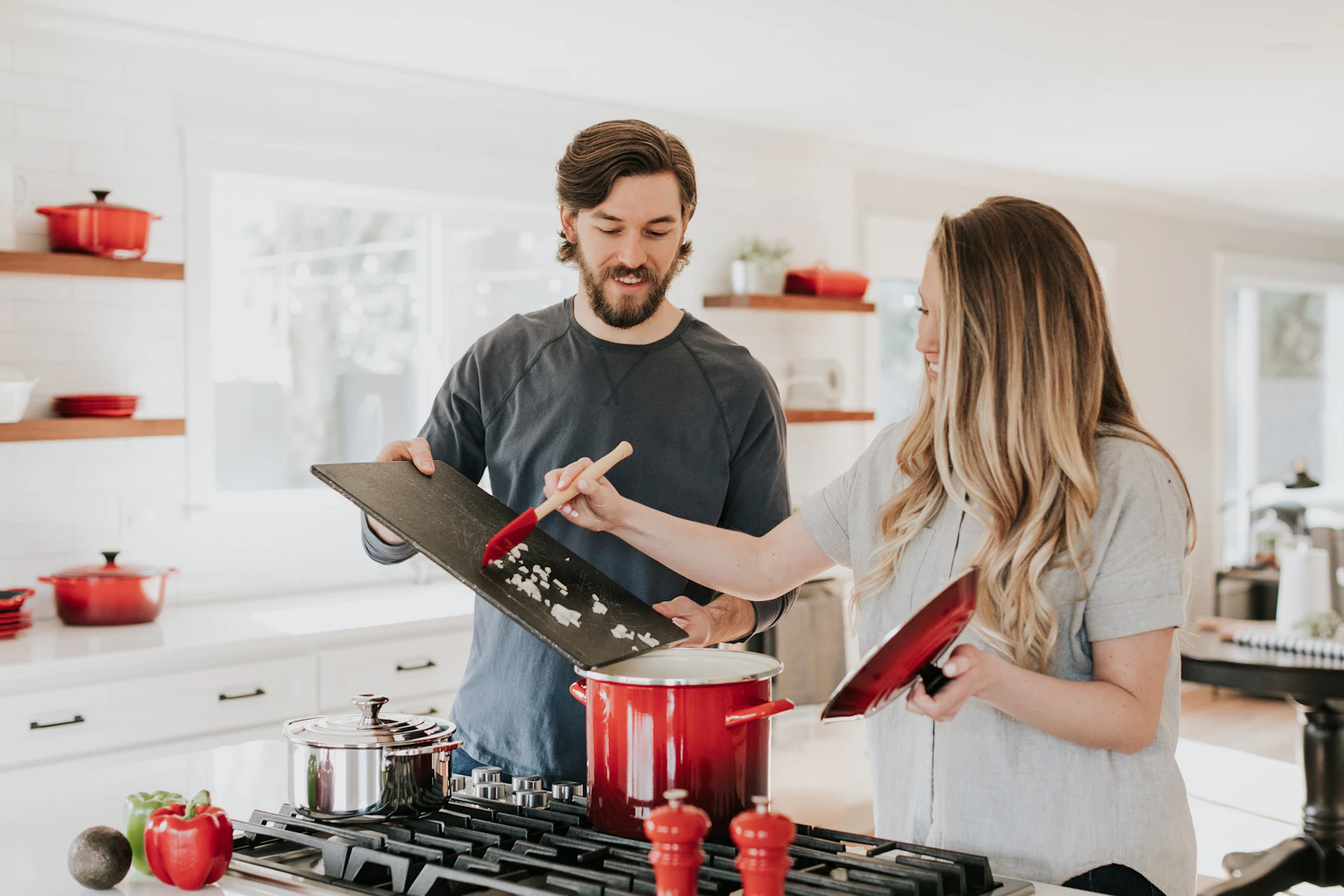
I started cooking because I was broke. I was twenty-three, living on a salary that barely covered rent, and the realization that a single plate of pasta in a restaurant cost what a kilogram of dried pasta cost in the shop was the financial shock that changed my life. I bought a secondhand Le Creuset pot, a wooden spoon, a copy of "How to Cook Everything" by Mark Bittman, and started.
Ten years later, cooking is the practice that has taught me more about being an adult than any other. Not because I am good at it. I am an adequate home cook, which is to say I make competent meals five nights a week without much thought. But the practice of cooking daily has been a quiet teacher of things I did not know I needed to learn.
This is what cooking has taught me about living. It is partly a cooking essay and partly not.
Attention is the only ingredient that matters
The first thing cooking taught me is that attention is the only ingredient that matters. The technique can be learned from a YouTube video. The ingredients can be ordered from a shop. The recipe can be read from a phone propped against the salt. What cannot be faked is whether the person at the stove is paying attention.
I learned this the hard way. In my early cooking years, I would multitask constantly — chop onions while the rice was cooking, scroll Twitter while the pasta boiled, answer emails while the sauce reduced. The food was fine. It was also unmemorable. The dishes I made while distracted tasted like food made while distracted.
The dishes I made while paying attention — tasting every five minutes, adjusting the salt as I went, noticing when the garlic was about to burn — were different. Not necessarily better in any dramatic way. Just more vivid. More present. The same recipe made attentively was a different dish from the same recipe made while distracted.
The lesson transferred. Most of the things I do in life, I do while distracted. Cooking is the one activity where distraction is detectable. The dish either tastes like attention or it does not. Most of the rest of life does not give me feedback that clear. Cooking taught me to look for it.
Time is something you spend, not something you save
The financial logic that started my cooking — a restaurant meal costs €18, a home-cooked meal costs €4 — is real. It is also not the lesson that mattered.
What mattered was that cooking takes time. Thirty minutes for most weeknight dinners. Sixty to ninety minutes for something more ambitious. Two hours for a Sunday braise. The time is not saved by ordering in. The time is just spent differently — by the delivery driver, by the line cook, by the person who packed your food. Cooking takes the time back into your own hands.
The first year I cooked daily, I resented the time. I cooked efficient meals — pasta, stir-fries, sheet-pan dinners — specifically because I did not want to spend my evening cooking. The food was fine. The resentment was constant.
The shift happened when I stopped treating cooking as a task to optimize and started treating it as a use of time. The evening was going to happen regardless. I could spend it in front of a screen, or I could spend it making something. The making was more tiring in the short term and more satisfying in the long term. The screen was the other way around.
I do not have a philosophy of screen time. I have a practice of cooking, which has the side effect of reducing screen time. The mechanism is not discipline. It is that the hands are busy.

Failure is a feature, not a bug
I have made more bad meals than I can count. Overcooked roasts. Undercooked risottos. Soups that were too salty to serve. Breads that did not rise. Sauces that broke. Eggs that were somehow both burnt and raw.
The remarkable thing about cooking failure is how recoverable it is. Most cooking mistakes are fixable in the moment. Too salty — add acid, sugar, or starch. Too bland — add salt. Overcooked — add moisture. Burnt — start over (this is the only unrecoverable one). The kitchen is a laboratory where the cost of failure is low and the feedback is fast.
I am not a person who fails well in other domains. I am cautious in work, careful in relationships, slow to commit. The kitchen taught me that failing and trying again is the default mode of learning, not a sign that you are bad at something. The thing I learned to make risotto the first time was wrong. The thing I learned to make risotto the tenth time was edible. The thing I learned to make risotto the hundredth time was something I am proud of. None of those iterations was free. All of them were worth it.
The pattern transfers. Anything I have learned to do well, I learned by failing at it repeatedly. Cooking is the practice that made that obvious. Most of the rest of life hides the iterations from me. Cooking puts them on a plate.
The recipe is not the dish
The other important lesson is that the recipe is not the dish. A recipe is a set of instructions. The dish is the thing you make by following the instructions while also adjusting for the actual ingredients you have, the actual pan you are using, the actual heat of your stove, the actual salt level of your butter.
I have cooked thousands of dishes. Most of them have deviated from the recipe in some way. Different brand of broth. Different size onion. Different cook time. The deviation is not a failure of the recipe. It is the recipe in use.
The metaphor that came to mind, which took me too long to articulate, is that recipes are like travel guides. They tell you what to expect, what to look at, what to skip. They do not tell you what you will actually see, taste, or feel. The recipe is the guide. The dish is the trip.
This is true of most things. Marriage guides, parenting books, career advice — they are all recipes for dishes that do not yet exist. The instructions are useful. They are not the experience.
What I cook most often
A practical note for anyone who has read this far and is now curious about what cooking daily looks like.
The meals I make most often:
Pasta with whatever sauce. This is probably 40 percent of my dinners. The sauce changes — tomato, garlic and oil, carbonara, pesto, ragù, aglio e olio with chili — but the structure is constant. Pasta cooks in salted water for the time on the package. Sauce is made while the pasta cooks. They combine. Done.
Roasted vegetables with grain. Sheet pan of vegetables (broccoli, cauliflower, brussels sprouts, sweet potato, whatever is in season), tossed with olive oil and salt, roasted at 220°C until the edges are browned. Served with rice, quinoa, or farro. The meal I make most often when I have nothing in the fridge except vegetables.
Stir-fry. The weeknight default when I want to use up vegetables. Hot pan, oil, aromatics (garlic, ginger, scallion), vegetables in order of cooking time, protein if I have it, sauce (soy, oyster, sesame oil). Served over rice. Takes twenty minutes.
Soup. The Sunday project. One pot, whatever vegetables are about to go off, broth, beans or lentils if I have them, herbs. Cooks for an hour. Eats for three days.
Roast chicken. Once a week, usually Sunday. The whole chicken, salt, oil, lemon, herbs, 180°C for about 90 minutes. Served with whatever vegetable is around. The carcass becomes stock on Monday.
These are not impressive meals. They are competent meals. They are what cooking daily actually looks like for someone who is not a chef.
What I have stopped doing
A few things I used to do that I have stopped.
Cook for guests. I used to make elaborate meals when friends came over. The stress of cooking while hosting was not worth the slightly more impressive dinner. Now I cook simple meals and let the company be the entertainment. People do not remember the meal. They remember being at the table.
Follow recipes exactly. The recipe is a suggestion. The dish is what you actually make. The adjustments are where the cooking is.
Buy ingredients for one meal. Most of my cooking is built from what I have. The shop is a place to refill staples, not a place to acquire specific ingredients for a specific dish. This means the dishes I make change based on what is in the fridge. It also means I waste less.
Try new cuisines weekly. I used to subscribe to meal kit services and try a new cuisine every week. The variety was enjoyable. The cooking skills did not improve, because each cuisine was a one-off. Now I cook the same handful of cuisines — Italian, French, Chinese, Japanese, Mexican — and try to get better at each.
What I would tell someone starting out
A few practical pieces of advice for someone who is starting to cook and is not sure where to begin.
Get a good knife and a good pan. A €100 chef's knife and a €100 cast-iron pan will outlast ten cheap alternatives and make the cooking easier. Everything else can be ordinary.
Learn five dishes. Pick five dishes you love. Learn them well. Cook them on rotation until you can make them without thinking. This is your first menu. You can expand later.
Salt aggressively. Most under-seasoned food is the result of timid salting. Salt the pasta water until it tastes like sea water. Salt the dish in layers as you cook. Taste before serving. The difference between bland and good is usually salt.
Shop once a week. A weekly shop, planned around what you are going to cook, is the foundation of daily cooking. Without the shop, the cooking does not happen.
Accept the imperfection. The first dozen meals will be bad. The next dozen will be mediocre. The dozen after that will be edible. By the hundredth meal, you will have a routine. The hundredth meal is where the practice starts to pay off.
The honest summary
Cooking is the most useful practice I have adopted as an adult. It has saved me money. It has improved my diet. It has given me a use of time that produces something. It has taught me about attention, failure, and the difference between the recipe and the dish.
It has not made me a better person. It has made me a person who pays attention to what he is doing while he is doing it. That is enough. Most days, that is enough.
If you are reading this and do not cook, the advice is to start. Not with a recipe. With a pot and a vegetable. The recipe will come. The vegetable is the starting point.