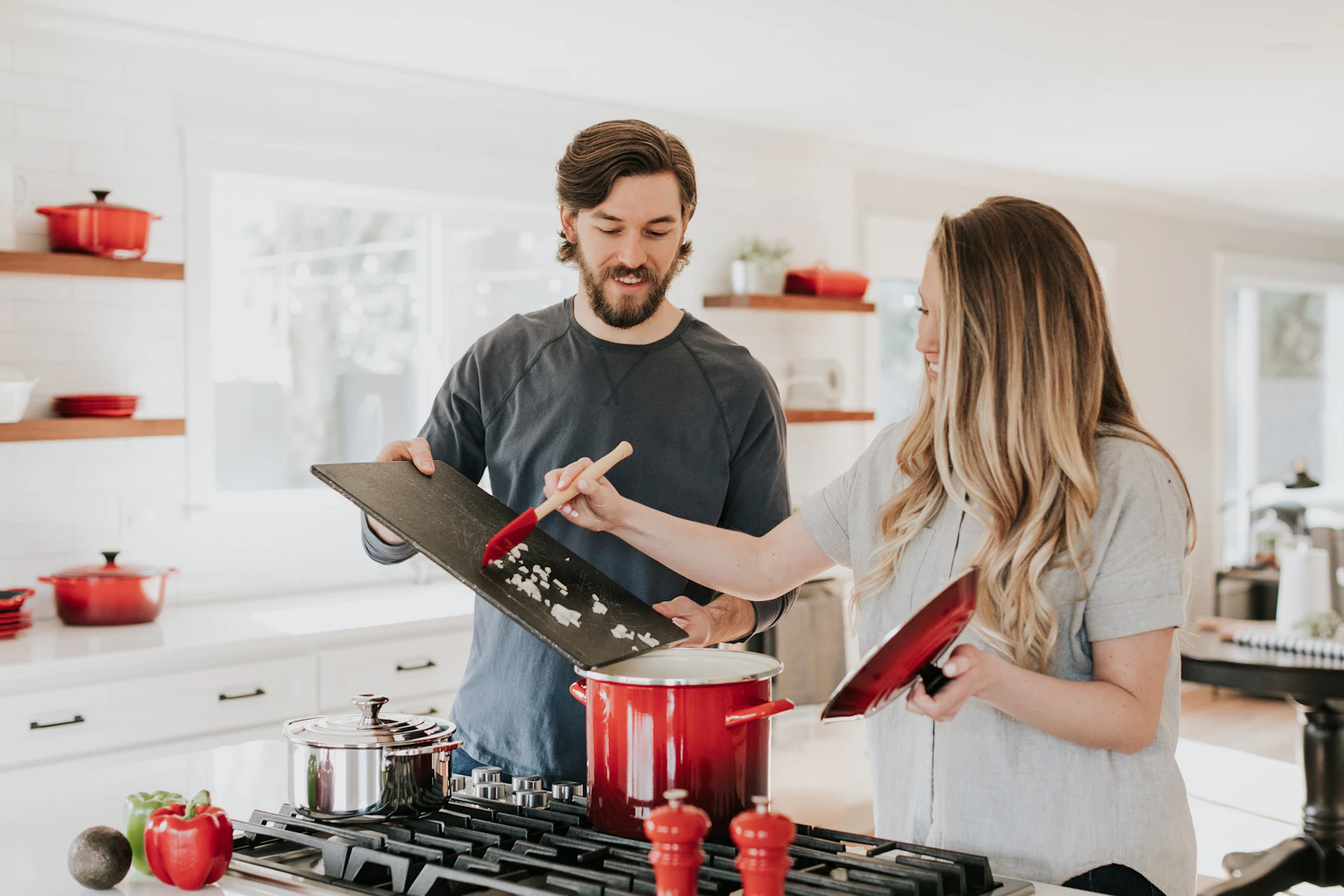
The host is rarely the person having a good time at a dinner party. They are usually running between the kitchen and the dining room, apologizing for delays, trying to time three dishes at once, and wondering why they agreed to do this.
It does not have to be that way. The dinner parties that feel good — the ones where the host is relaxed, the food is good, and nobody is washing a pan at 11 p.m. — share a few habits that have nothing to do with cooking skill.
The principle: prep-heavy, day-of-light
The mistake most home cooks make is concentrating all the work into the final three hours. They shop, prep, cook, plate, and serve in a compressed window. By the time guests arrive, they are already exhausted.
The principle that fixes this is to push as much work as possible into the 48 hours before the dinner. That way, day-of is mostly assembly, reheating, and pouring wine.
The 48-hour timeline
Two days before
- Decide the menu and write a timeline backwards from serving time
- Shop for everything except the freshest herbs and bread
- Make any stocks, marinades, or spice blends
- Confirm with guests and lock the headcount
One day before
- Make any cold dishes (desserts, salads, sauces) that improve overnight
- Marinate anything that needs marinating
- Chop vegetables for the next day, store in airtight containers
- Set the table
- Choose the playlist
- Chill the wine (white, rosé, sparkling)
Three hours before
- Pull the meat or main from the fridge to come to room temperature
- Cook any component that holds well at room temperature (roasted vegetables, certain grains)
- Make the sauce if it is a finishing sauce
One hour before
- Trim and prep any fresh herbs or garnishes
- Reheat anything that was cooked earlier
- Set out cheese, olives, and a simple aperitif
Thirty minutes before
- Pour yourself a drink
- Light the candles
- Take a breath
The actual day-of cooking should take less than 45 minutes for a three-course dinner for six to eight people.
The menu that doesn't punish you
The easiest dinner party menu for eight:
- Aperitif: sparkling wine, olives, marcona almonds, a small board
- Starter: a composed salad, a plate of charcuterie, or a chilled soup that was made yesterday
- Main: a braise (made yesterday), a roast (oven does the work), or a one-pot pasta (made in 30 minutes while guests are eating starter)
- Dessert: something bought (good bakery tart) or made yesterday (panna cotta, crumble)
- Coffee and after-dinner drinks
Notice what is missing: anything that requires last-minute plating, anything that has to be served immediately, anything that needs more than one pan. The day-of work is reheating, plating, and pouring.
What to delegate
Most hosts refuse to ask for help because they want the dinner to be "theirs." This is the wrong instinct. Guests are usually grateful to be useful.
Concrete asks:
- "Can you bring a salad?"
- "Can you bring a bottle of wine?"
- "Can you be on ice-cream-and-coffee duty at the end?"
Each delegated task removes ten minutes of host work and gives the guest something to do besides sit and feel slightly awkward.
The timing
The most common mistake is overcooking the timeline. Three courses for six people does not need three hours. It needs two, with a relaxed pause between courses where people are still drinking and talking.
A working timeline:
- 7:30 — guests arrive, aperitif
- 8:00 — sit down, starter served
- 8:30 — clear, plate main
- 9:00 — dessert
- 9:30 — coffee, port, conversation
- 11:00 — last guests leave
A good dinner party ends when people are still enjoying themselves, not when everyone has been politely waiting for it to be over.
What to skip
- Matching wines for every course. One red and one white is enough.
- Multiple dessert options. One good dessert is better than three mediocre ones.
- The perfect outfit. Wear something you already feel good in. Nobody will remember your outfit; they will remember whether they felt relaxed.
- Cleaning during the party. The dishes can wait until morning. Or, better, until the day after.
The goal of hosting is not to produce a flawless meal. It is to gather people you like into a space where everyone — including you — feels welcome. Anything that does not serve that goal can be cut.